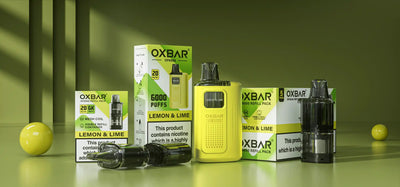
Short answer: Since 1 October 2026, vaping products released for sale in the UK must carry a duty stamp: an 18mm × 42mm rectangular label that seals the outer pack. But stock made or imported before that date can still be sold without one until 31 March 2027. So for the next few months, a pack with no stamp is not on its own a sign that a product is fake or illegal. From 1 April 2027 it is, because selling unstamped vapes becomes an offence.
That grace period is why you'll see stamped and unstamped packs of the same product side by side this winter. Here is how to tell what you're looking at.
If you want the background on the duty itself, including the 22p-per-ml rate and what it adds to a pod or a bottle, see our guide to Vaping Products Duty. This page is only about checking a pack.
What the stamp is, and where it goes
The stamp proves that duty has been accounted for. It is fixed by the manufacturer, importer or approved warehouse before the product reaches a shop, never by the retailer.
HMRC sets three physical rules for it:
- Size: rectangular, 18mm wide and 42mm long.
- Position: on the outermost retail packaging, placed so the pack cannot be opened without damaging either the pack or the stamp. In practice it usually runs across an opening edge, like a seal.
- Single use: once fixed, it can't be peeled off and reused.
It goes on the pack, not the device or the pod. HMRC's guidance says the stamp is attached to the outermost part of the final retail packaging of each individual vaping product, or to the bottle itself if there is no outer box. In practice that means:
- A pod kit or single device in its own box: one stamp on that box.
- A pack of prefilled pods: one stamp on the pack. The pods inside don't carry their own.
- A 10ml bottle sold without a box: the stamp goes on the bottle, sealing the cap.
- Several boxed products bundled together, such as a five-pack of kits: each product is an individual vaping product, so expect a stamp on each box. HMRC's published guidance doesn't address multipacks separately.

Nicotine-free liquid is covered too: the duty applies whether or not the liquid contains nicotine.
Two kinds of stamp you might see
There are two versions in circulation during the changeover, and both are legitimate.
| Transitional stamp | Digital stamp | |
|---|---|---|
| What it has | Physical security features only | Physical features plus a scannable code |
| When it's used | Could be bought until 30 November 2026; can't be fixed to products from 1 January 2027 | Available now; the only stamp allowed on newly packed products from 1 January 2027 |
| Can you scan it? | No | Not yet for shoppers. HMRC says retailers and customers will be able to scan digital stamps "in due course" |
So if a stamp has no code on it, that doesn't make it a copy. It is probably a transitional stamp on stock packed in the autumn.
HMRC hasn't published images of the final designs. It has said each stamp carries at least two visible security features, two hidden ones and one forensic marker. None of those is something you can reliably test at home, which is why the checks below focus on what you can see.
The four-question check
Take the pack in your hand and work through these in order.
- Is there a stamp on the outer packaging? Not on a sticker inside, not on the device: on the box itself.
- Does it seal the pack? It should cross an opening, so that getting into the box would tear it. A stamp sitting flat in the middle of one face, nowhere near an edge, is worth a second look.
- Is it intact? Look for cuts along the opening line, lifted corners, a stamp that has been stuck back down, or a stamp that seems to have been moved from another pack.
- If there's no stamp, what's the date? Before 1 April 2027, an unstamped pack can be legitimate older stock. From 1 April 2027 it should not be on sale at all.
What your result means
| What you find | What it most likely means | What to do |
|---|---|---|
| Stamp present, intact, sealing the pack | What a compliant product looks like | Nothing |
| Stamp present but cut, lifted, re-stuck or loose | The pack may have been opened, or the stamp tampered with | Don't use it. Contact the seller, and report it if they can't explain |
| No stamp, before 1 April 2027 | Possibly stock made or imported before 1 October 2026, which is allowed | Ask the seller. A legitimate shop should know where its stock came from |
| No stamp, from 1 April 2027 | It shouldn't be on sale | Don't buy it, and report it |
| Stamp looks right, but something else feels off | A stamp is one check, not the only one | Check the product is notified with the MHRA, and buy from a seller you can trace |
That last row matters. A stamp shows that duty has been accounted for. It doesn't tell you the liquid inside meets UK rules on nicotine strength and tank size, or that the device is genuine. Those are separate checks, covered in our guide to choosing a trusted online vape store.
Why shops can still sell unstamped stock, and what they must keep
The grace period exists so retailers can sell stock already in the supply chain rather than destroy it. It comes with conditions.
HMRC's guidance for retailers says that unstamped products offered for sale after 1 October 2026 need evidence that they fall within the grace period. If a business can't confirm a legitimate reason, it should not buy, supply or sell them. Retailers are expected to keep, for at least six years:
- who supplied the stock, with address and contact details
- invoice numbers, delivery notes and receipt dates
- what was bought, held and sold
- when the products were produced or imported
- what checks were made, and what was done with anything non-compliant
That is why "where did this come from?" is a fair question to put to any seller of an unstamped pack between now and the end of March. A shop working within the rules has an answer.
From 1 April 2027, HMRC can seize unstamped goods, charge penalties and, in the most serious cases, open a criminal investigation.
How to report a product
If a pack has a damaged or missing stamp and the seller can't explain it, you can report it to HMRC or to your local Trading Standards service. It helps to note where and when you bought it, and to keep the packaging.
What this means at VapeOffers
We buy from UK wholesalers and check what arrives against these same rules. If an order ever reaches you with a stamp that looks damaged or wrong, contact us before using it and we'll put it right. You can browse our nic salts and prefilled pods knowing where they came from.
Quick answers
Is an unstamped vape illegal? Not before 1 April 2027, if it was made or imported before 1 October 2026. After 31 March 2027, it can't legally be sold.
Can I scan the stamp to check it? Not yet. Digital stamps carry a code, and HMRC says shoppers will be able to scan them in due course.
Does a nicotine-free vape need a stamp? Yes. The duty and the stamp apply to vaping liquid whether or not it contains nicotine.
Does the device need a stamp, or the box? The box. The stamp goes on the outermost retail packaging.
Does an empty refillable kit need one? The duty is charged on liquid, so a kit sold with no liquid in it carries no duty. A kit sold with liquid inside is liable for that liquid, and its pack is stamped.
Written by Ullah Sami (Sam), founder of VapeOffers, with 15 years in UK vape retail. Checked against HMRC guidance on 1 November 2026. This is general information, not legal or tax advice. Vaping products are for adults aged 18 and over. Nicotine is a highly addictive substance.