Effective from 1 October 2026.
On 1 October 2026 the UK introduces Vaping Products Duty (VPD), a new excise duty charged on vaping liquid at a flat rate of 22p per millilitre. It applies whether or not the liquid contains nicotine. A parallel Vaping Duty Stamps Scheme begins on the same day, and a separate set of dates through 2027 governs when every product on a UK shelf must carry a stamp.
This guide sets out what HMRC has actually published, in plain terms. Every figure below is taken from GOV.UK guidance checked on 28 September 2026, and the sources are linked at the end. Where HMRC's published guidance does not address a point, we say so rather than guessing.
The rate: 22p per millilitre
Vaping Products Duty is charged per millilitre of liquid, at a single flat rate. HMRC's published example is a 10ml bottle, which attracts £2.20 of duty — that is 22 pence per ml.
There are no bands, no tiers and no separate rate by nicotine strength. The 2024 proposals for a three-tier rate did not survive into the scheme as introduced: one rate applies to all vaping liquid.
Two consequences follow, and both are worth being clear about because a lot of coverage gets them the wrong way round:
- The duty is proportional to how much liquid you buy, not to what kind. A 100ml shortfill carries ten times the duty of a 10ml bottle because it holds ten times the liquid — not because large bottles are taxed more heavily. Per millilitre the charge is identical.
- Nicotine strength makes no difference. A 20mg nic salt and a 0mg shortfill of the same volume carry exactly the same duty.
What the duty is charged on
HMRC describes the charge as applying to substances intended for vaping. The guidance is explicit on two points that are often assumed the other way:
- Nicotine-free liquid is in scope. GOV.UK states that products are liable “whether the liquids contain nicotine or not”. Shortfills, 0mg e-liquid and nicotine-free flavour concentrates are all covered.
- Liquid you mix yourself is in scope. The guidance covers substances made up from propylene glycol (PG), vegetable glycerine (VG) and flavourings.
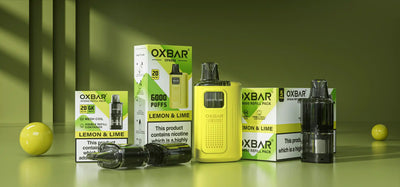
Prefilled pods and disposables are covered as vaping products, with duty calculated on the liquid they contain. HMRC's own worked example is a 2ml pod at 44 pence.
What it does not apply to
The duty is calculated per millilitre of vaping liquid. A product with no liquid in it has nothing for the charge to be calculated on, and HMRC's guidance on the duty does not extend the charge to devices themselves.
In practice that means the duty does not fall on:
- Refillable devices and vape kits sold empty
- Batteries, mods and chargers
- Empty replacement pods, tanks and coils
- Accessories such as lanyards, cases and drip tips
A kit sold with liquid already inside it is a different matter: the liquid in the box is liable in the normal way.
What 22p per ml adds, by format
The table below converts the statutory rate into the duty carried by common pack sizes. The VAT column applies the standard 20% rate to the duty itself, because VAT is charged on the duty-inclusive value. These are duty figures, not retail prices — what any individual product sells for depends on the producer, the supply chain and the retailer.
| Format | Liquid volume | Duty at 22p per ml | Duty including VAT |
|---|---|---|---|
| Single prefilled pod | 2ml | £0.44 | £0.53 |
| Pack of two pods | 4ml | £0.88 | £1.06 |
| Standard nic salt bottle | 10ml | £2.20 | £2.64 |
| Small shortfill | 50ml | £11.00 | £13.20 |
| Large shortfill | 100ml | £22.00 | £26.40 |
| Large shortfill | 200ml | £44.00 | £52.80 |
The 100ml line is the one most people notice. A 100ml shortfill is a large volume of liquid bought in one go, so it carries a large duty figure in absolute terms — but the per-millilitre charge is the same 22p that applies to a 10ml bottle.
Duty stamps, and the three dates that matter
Alongside the duty, the Vaping Duty Stamps Scheme requires liable products to carry a physical stamp. HMRC specifies the stamp as rectangular, 18mm wide and 42mm long, attached when the product is packaged for retail sale and positioned so the packaging cannot be opened without damaging either the packaging or the stamp.
Stamps are affixed upstream — by manufacturers, warehousekeepers and the designated UK representatives of overseas producers. Retailers do not need HMRC approval to sell vaping products.
Three dates govern the transition:
- 1 October 2026 — duty becomes payable. Approved traders must account for duty and affix a stamp to liable products released for UK consumption. Products carrying transitional stamps may be imported or released from duty suspension from this date.
- 1 January 2027 — transitional vaping duty stamps must no longer be affixed to products.
- 1 April 2027 — all vaping products outside duty suspension must carry a vaping duty stamp regardless of when they were produced, and it becomes an offence to sell vaping products without one.
The gap between the first and last date is the sell-through window for stock already in the supply chain. It is why you will see unstamped and stamped packaging side by side on UK shelves during the winter, and why that is not in itself a sign of anything irregular.
Do you need to do anything?
If you buy vaping products for your own use: no. There is no registration, no declaration and no personal liability. The duty is accounted for upstream and reaches you as part of what a product costs.
If you run a business that manufactures vaping liquid or holds it in duty suspension, approval is required and applications opened on 1 April 2026. HMRC asks applicants to apply at least 45 working days before they intend to start the activity, and says a more complex application can take longer than that. From 1 October 2026 it is against the law to manufacture vaping products on premises HMRC has not approved; HMRC states that producing without the appropriate approval is an offence for which you may have to pay a penalty, and refers more broadly to civil or criminal sanctions. It does not publish a single headline penalty figure, so we are not going to quote one. That is a matter for producers and warehousekeepers rather than retail customers, and anyone in that position should work from HMRC's own guidance and, where needed, professional advice.
What it changes about how people buy
We are not going to pretend to know how every producer will respond, and we are not going to encourage anyone to stockpile. Two observations are simply arithmetic, and worth having in front of you:
- The flat per-ml rate removes the duty-side argument for any particular bottle size. Because the charge is the same per millilitre whether you buy 10ml or 100ml, the duty on its own gives no advantage either way. Whatever price-per-ml differences exist between formats after 1 October come from the product and the supply chain, not from the duty.
- Hardware is a different line on the receipt. Devices and empty pods, tanks and coils are not charged the duty. For anyone weighing up a refillable kit, the device side of that decision is unaffected by the change; the liquid side is affected the same way it is for everyone.
If you want to look at the categories the duty touches directly, they are e-liquid, nic salts and shortfills. For the wider picture of how UK law treats different product formats, our guide to what counts as a disposable vape under UK law covers the classification rules that sit alongside this duty.
Sources
All figures and dates above were checked against GOV.UK on 28 September 2026:
- HMRC — Prepare for Vaping Products Duty and the Vaping Duty Stamps Scheme
- HMRC — Introduction of Vaping Products Duty from 1 October 2026
- HMRC internal manual — Vaping Products Duty and Vaping Duty Stamps guidance
- HMRC — Apply for approval for Vaping Products Duty and the Vaping Duty Stamps Scheme
This guide is general information about UK excise duty, not tax or legal advice. Vaping products are for adults aged 18 and over. Nicotine is an addictive substance.